Preschool

It might be hard to believe, but Jenny and I are thinking about enrolling Brenden in preschool for a couple of days a week starting this fall. He’ll be two years old by then. He does so well in nursery and has so much energy and curiosity that we think he will really enjoy it. He seems to get along well with other kids and enjoys playing with them, but he doesn’t get much of an opportunity to be with them except on Sundays at church and the occasional family event. Preschool will also give Jenny a bit of a break for a few hours each week. Our friends have a three-year-old son who attends one of the preschools and absolutely loves it.

We are considering four different preschools in the Euless area right now. Next week we’d like to visit some of them during class to see how they run things and what the teachers are like. It’s a big decision, but I’m really excited about it. I love seeing my boys experiencing new things, learning about the world, and developing new skills. Those are some of the best parts of being a father.

Various Thoughts on Credit Cards

I recently called one of my credit card companies to cancel our primary credit card. We ran nearly every possible expense through this card but recently switched to a different one with a better rewards program.

Me: I’d like to cancel this credit card.
Bank Rep: What makes you want to cancel?
Me: I don’t like how the reward program works.
Bank Rep: OK, I have canceled the card. Thank you for calling.

Wow. I didn’t want to argue with him for five minutes as he tried to convince me to stay, but I was a bit surprised that he didn’t even try. We ran about $30,000 a year through this card. Since we paid it off each month and didn’t pay an annual fee, all the bank earned from us is their 3 percent transaction fee, paid by the merchant. Then the bank paid us 1 percent cash back. So our business was worth about $600/year to them, which apparently is not enough to make us worth their time.

I wonder if the rep would have fought harder to keep us if we regularly carried a balance or did things like paying late or getting cash advances to run up fees? On the other hand, I got the impression that the rep simply didn’t care and was only doing his job.

New Law

As you might have read, a new law went into effect in February that eliminates some of the more outrageous tricks that lenders had used to wring money from credit card users. As a result, expect to see a higher emphasis on fees from them. This CNN article discusses some of the traps to avoid. Lenders are also tightening requirements and being more stingy with credit, which affected us when we applied for our new card. For the first time, the lender required me to verify my income before issuing the card. Once they issued it, Chase gave us a pitiful credit limit, apparently because we had a very large amount of available credit with our other bank. Now that I’ve closed the other card, we should be able to get a higher limit on the new card.

Recommendations

As a bonus, here’s my totally unsolicited advice on credit cards:

  1. Pay off your cards each month. If you can’t pay for something when the bill comes due, save until you can. I don’t even know my interest rate because it doesn’t affect me.
  2. If you aren’t disciplined enough to limit your spending and pay off your cards each month, don’t use credit cards and pay cash instead.
  3. If you have to pay an annual fee or aren’t getting at least 1 percent back on all purchases, fire your lender and get a better card. Check BankRate to compare credit card deals.

Solar Update

First, the bad news: SolarCity evaluated our house and determined that our big cottonwood tree casts too much shade onto the roof, so we are not good candidates for solar panels right now. I hope that over the next few years, solar technology will advance, becoming more efficient and less expensive. Smaller, better panels might fit on our roof and get enough sun to make them worth adding.

Now, the good news: our solar water heater has been working hard. The roof has reached at least 149, heating the water to the upper 120s during a sunny day. The solar controller disables the electric heater from 5am until 7pm. We try to shower and wash dishes in the morning or early afternoon so the solar heater can reheat the water. When the solar heater isn’t running, the water in the tank slowly cools, maybe a degree or two per hour. The hotter the water gets during the day, the longer it takes for the electric heater to kick in after 7pm, saving us more money.

The solar water heater helps in two ways. Most importantly, it heats the water after we use it. I think that’s where most of the savings occur. Second, it keeps the electric heater from running for 14 hours a day, whether to recharge after use or simply to maintain the desired temperature. I recently learned that you can buy a special timer for your traditional water heater to receive some of this second benefit. By letting the water cool when you don’t need hot water, such as during the day while you’re at work or at night while you’re sleeping, supposedly you can save anywhere from $2-20/month by adding a $40 timer.

The Three-Hour Rule

The airline industry is abuzz regarding the upcoming “three-hour rule”, which forces U.S. airlines to allow passengers to deplane after no more than three hours of waiting on the tarmac. Congress passed this law in response to several high-profile incidents in which passengers were stranded for many hours due to bad weather and ATC delays in New York, Minnesota, Austin, and other areas.

In my opinion, this law is a classic example of politicians who are more interested in making their constituents happy than in actually understanding the problem and finding a good solution. At first glance, the three-hour rule might sound like a great idea. After all, who wants to sit on an airplane going nowhere for 12 hours with limited food and overflowing toilets? However, this new law severely limits our ability to operate in bad weather, will ultimately cause more passenger inconvenience, and will lead to a significant increase in flight cancellations.

Multi-hour taxi delays generally occur for one of two reasons: 1) Thunderstorms that prevent traffic from efficiently flowing to and from an airport, and 2) Frozen precipitation that causes lengthly deicing delays, makes the runways extremely slick, and sometimes prevents flights from departing or arriving altogether. Sometimes there’s no easy way to know how long a flight will take to go from the gate to the air.

For example, I once worked flights to and from several cities in the Northeast when a line of strong thunderstorms moved through, blocking many of the available “highways in the sky”. Due to the large number of flights and limited paths, the air traffic controllers were hardly allowing anyone to move, gridlocking much of the region. In several cases, all we could do was to add lots of fuel and send the flights out to get in line to depart. They had to wait in line until the storms moved off some of the departure paths. If a flight burned up too much fuel in line and needed to get more, or needed to return to the gate for “passenger convenience”, ATC put that flight in the back of the line once it came back out, resulting in an even longer delay.

As another example, the FAA has declared it illegal to depart in certain combinations of frozen precipitation, such as ice pellets (sleet), snow, and rain mixed together. WIth any frozen precip falling, the aircraft must be deiced prior to departure, which can take a long time. Once deiced, if one of the forbidden combinations of frozen precip falls on the aircraft, the pilots must 1) wait until that combination stops falling, 2) get deiced AGAIN, and 3) hope that the combination doesn’t reappear and force them to repeat the whole process. This is similar to what happened to jetBlue at JFK during their Valentine’s Day meltdown a few years ago. The flight needs to be ready to get deiced and launch when able, but since no one can know for sure what the weather will bring, sometimes the crew needs to get the plane out there and wait.

By forcing us to return to the gate after three hours for “passenger convenience”, we will lose valuable opportunities to launch flights during the sometimes limited windows that become available. Even more importantly, keeping passengers onboard beyond the three-hour mark can result in a fine of $27,500 per passenger. On our 737s, that would be over $3.7 million for a full flight. Rather than risk a heartstopping fine like that, the airlines will preemptively cancel many flights that could face multi-hour delays. So instead of potentially being stuck on a plane for a few hours before reaching their destination, some passengers will have their flights cancelled and won’t reach their destinations at all until a day or more later.

The law goes into effect in April, during thunderstorm season. I’m curious to see how big the impact will be. For more information, check out the following articles:

Three-Hour Rule Ready to Become Reality

Airlines Threaten to Cancel Flights
Solar Power for $35/Month?

Thanks to my awesome mother-in-law who sent the article, I just learned of a fantastic program that could allow you to lease a 4KW solar power system for your home for only $35/month. If you know anything about solar power, you already know what a great deal that is.

I’ve looked into adding solar panels to our house, but the up-front cost would be tens of thousands of dollars with a payback period of 15-20 years, which is unacceptable. But TXU is partnering with SolarCity to let Texas residents lease the equipment for a 15-year period instead, even if you’re not a TXU customer. They estimate the savings at $50/month, but if your system can generate more power than you’re using at the time and you’re a TXU customer, you can pump power into the grid and actually run your power meter backward. Needless to say, I just signed up to be considered.

Intrigued? Visit the TXU Solar Leasing website. The Fort Worth Star-Telegram posted a good article on the program that explains it it more detail.

Solar Water Heater is Here

UPDATE: When I woke up around 1:00pm on Thursday, the system was working. Even though the outside temp was about 60-65, the roof temp was about 120, hot enough to activate the pump when needed. I’m guessing it ran for 2-3 hours total on Thursday when the sun was highest overhead. We’ll definitely see more benefit from March-October, but it could still help a bit during the winter.

The system makes a cool gurgling sound, like a waterfall, but you can’t hear it well from the bedroom or living room.

==========================================================

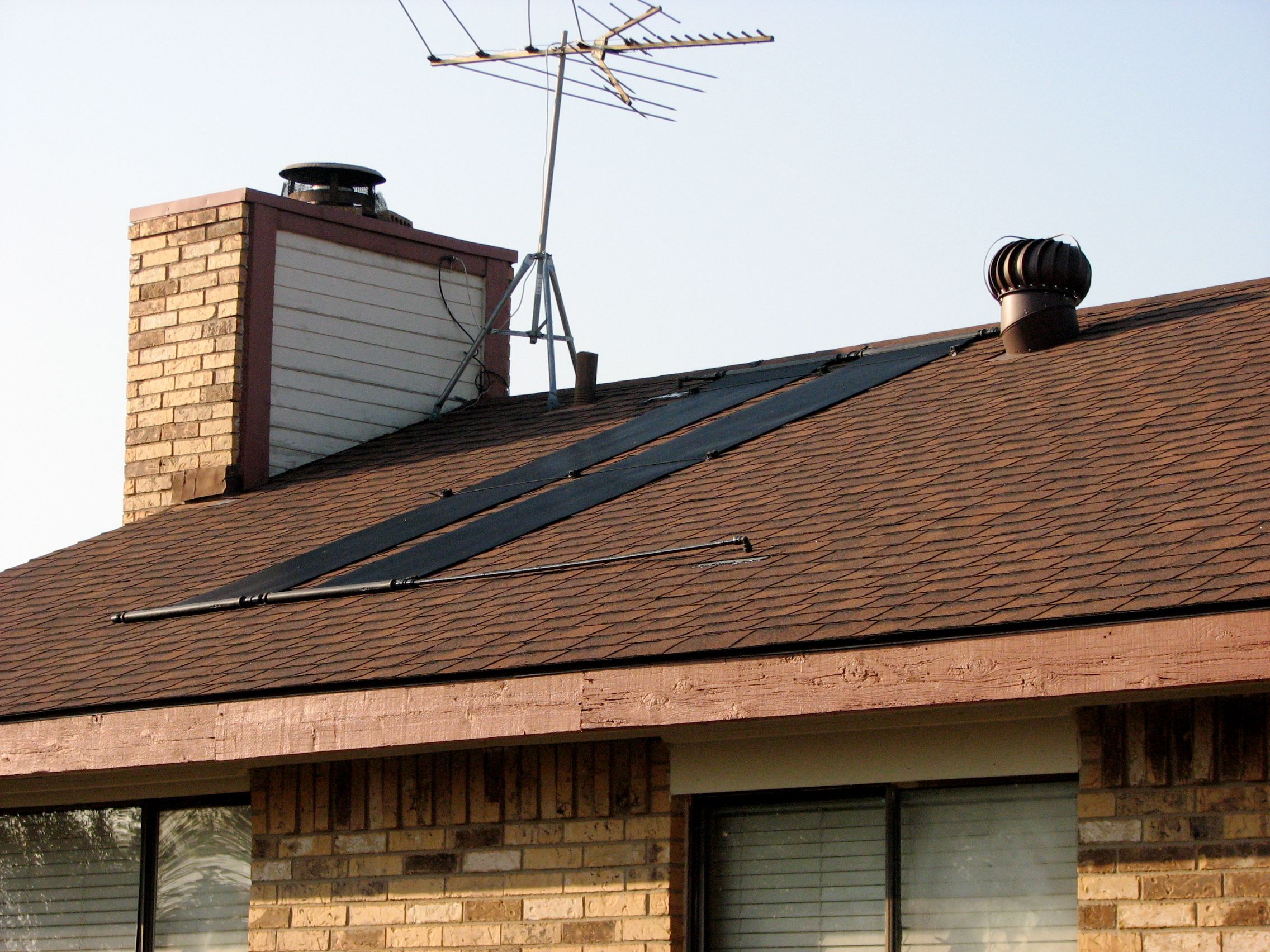
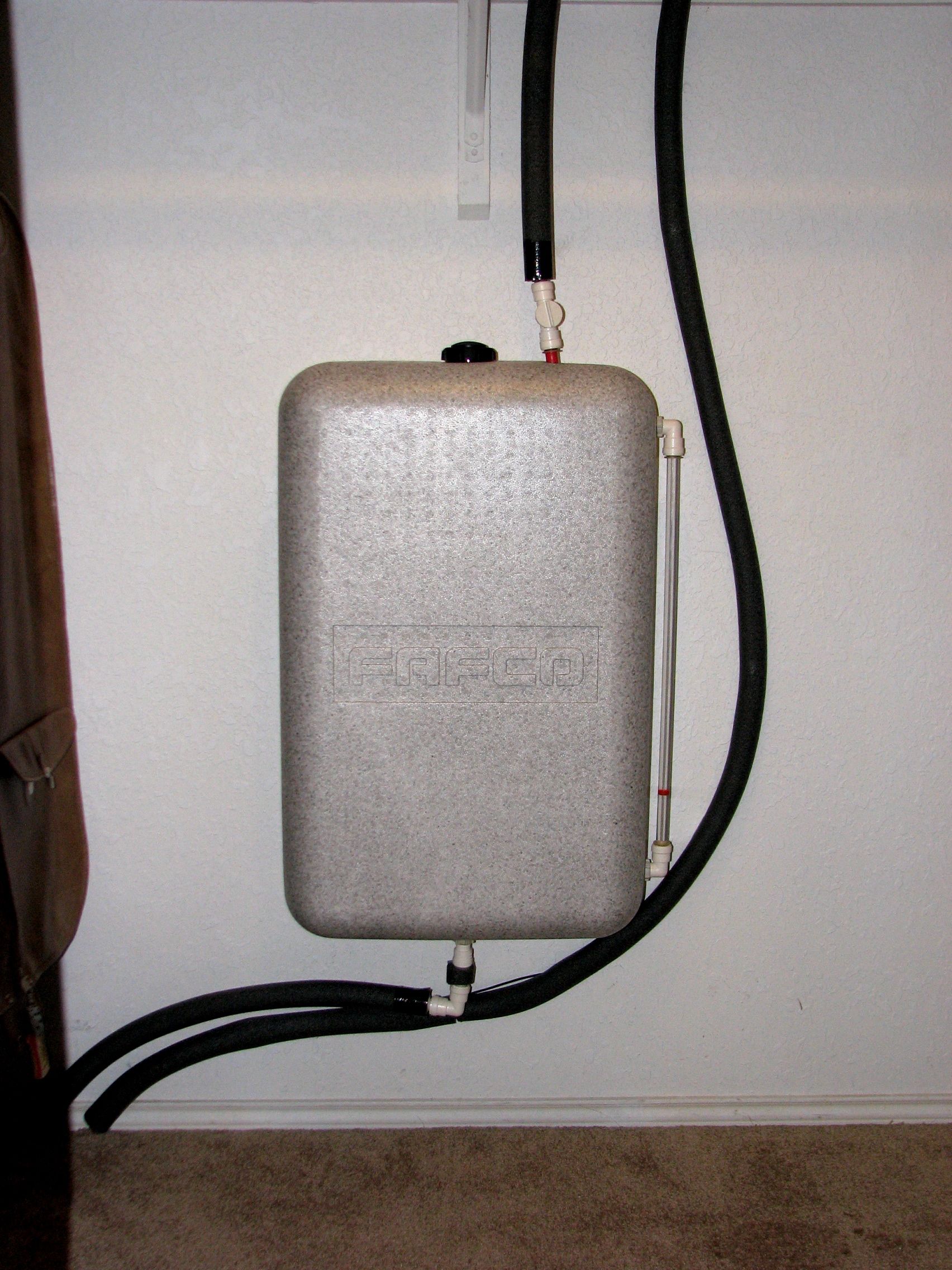
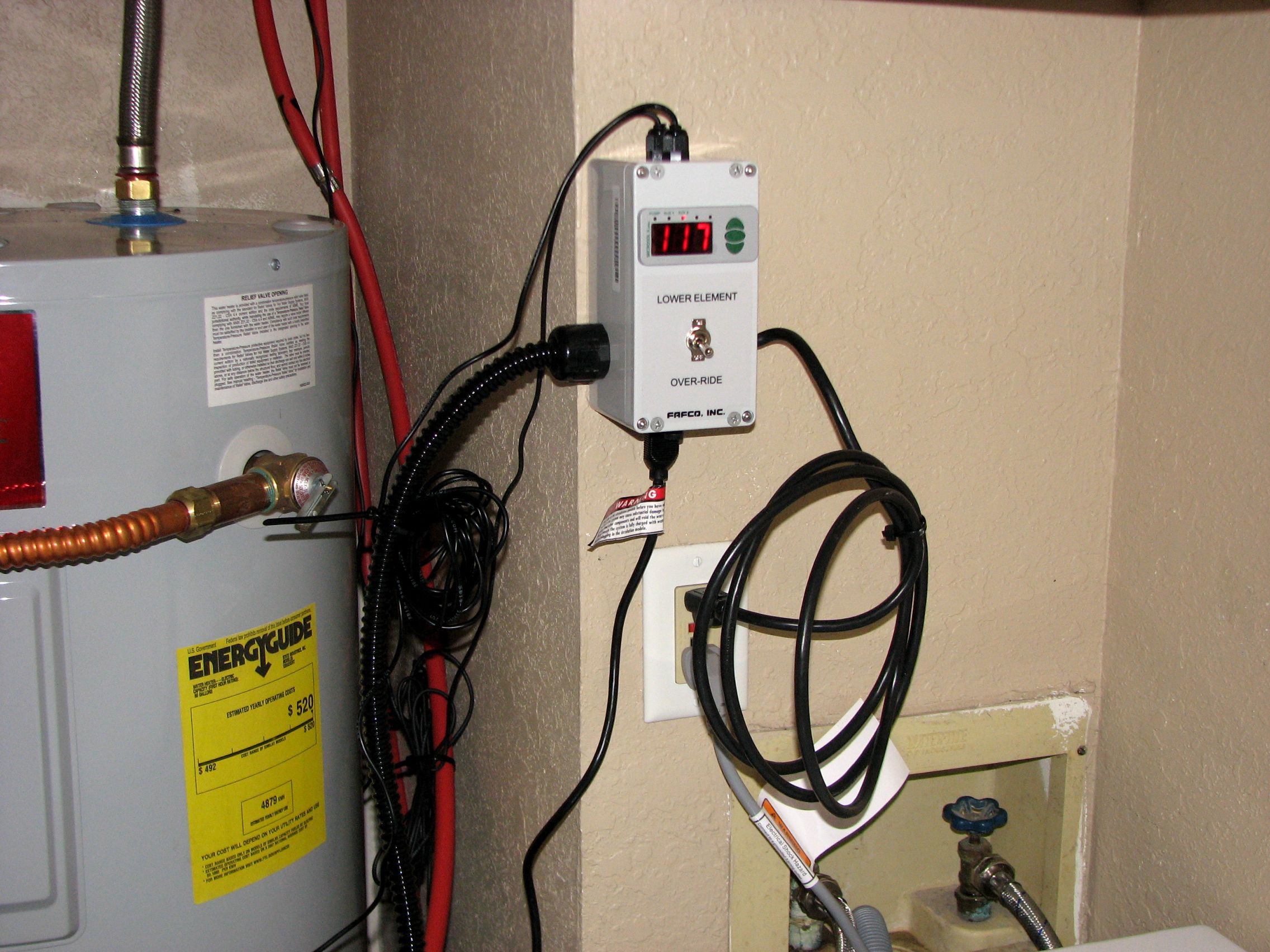
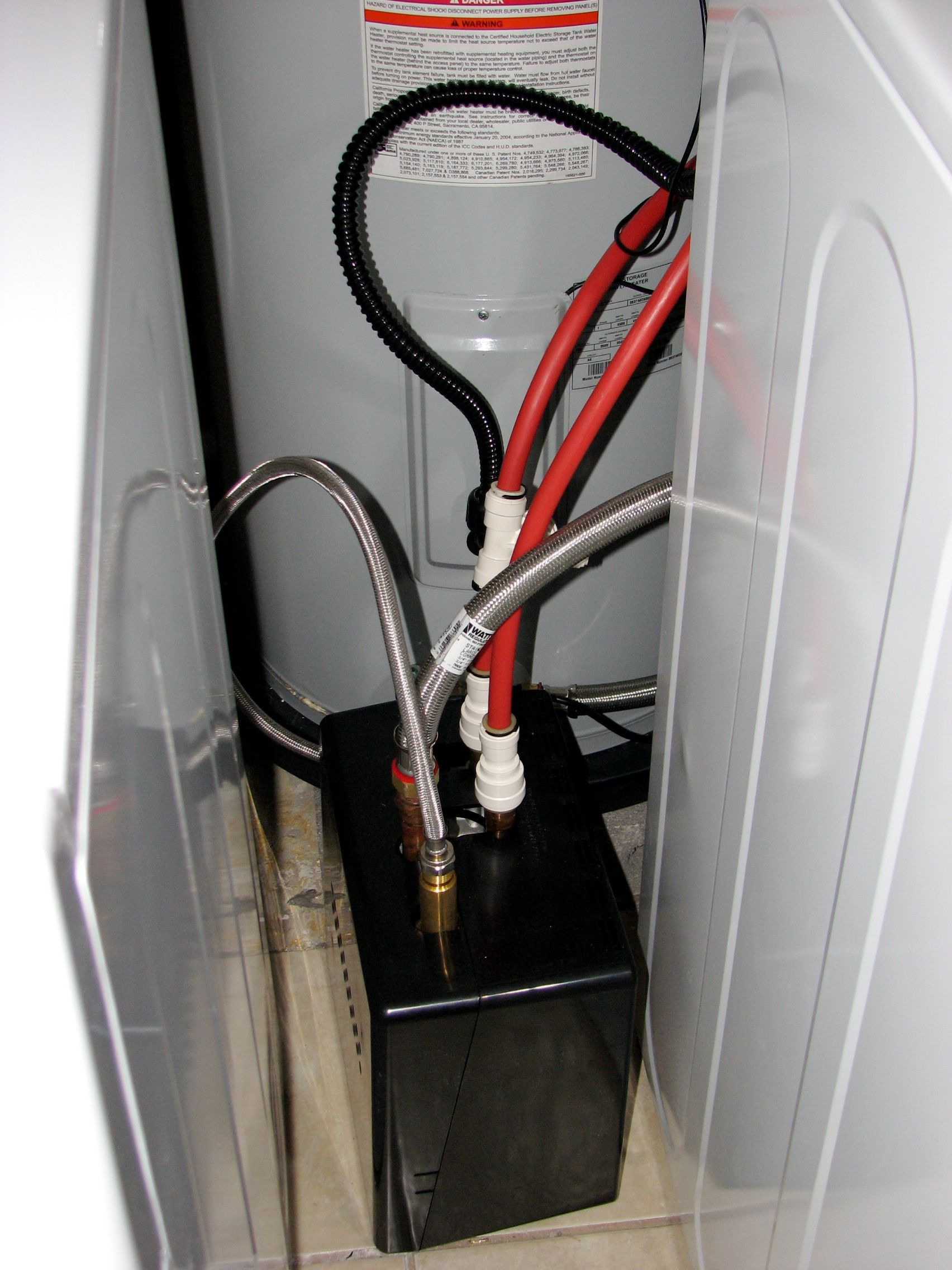
Success! The guys from Innerline Plumbing came over on Wednesday and installed our solar water heater. It took all day for a crew of 3, but they worked hard and got it done. Tomorrow’s forecast calls for sunny weather, so I’m hoping it will get hot enough on the roof for the system to run a bit. The controller compares the roof temperature to the water tank temperature. If the roof is at least 10 degrees hotter, the pumps kick in and send water up to the roof to get heated. Naturally, it will run more in the summer , but it should run some in the winter since the roof soaks up so much heat. Here are some pictures:

Panels on the roof – water flows through tiny tubes in these black plastic panels and absorb the sun’s energy

panels

Storage tank – This tank stores the water that flows through the solar side of the system. When the system is running, this water is very hot, so the tank and pipes are covered in insulation. The tank is in our master closet because there wasn’t room in the utility room.

tank

Controller – This little computer compares the temperature in the existing water heater to the room temperature and turns the pumps on and off as needed.

controller

Heat Exchanger – This black box contains heat exchangers. The solar side of the system is closed-loop, meaning it has a self-container water supply. Hot water from the solar side of the system flows down into this box, transfers the heat to metal plates, which then transfer the heat to the water that we actually use to shower and wash dishes. It flows into the bottom of our electric water heater so it doesn’t have to run as much.

heat exchanger